“No head injury is too trivial to ignore” -Hippocrates 4th century BC
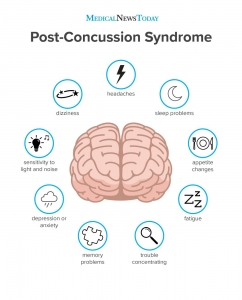 No doubt you or someone close to you has experienced a Traumatic Brain Injury (TBI). In New Zealand, 36,000 people suffer TBIs each year. After suffering a serious knock to the head you quickly realise they are nothing like a physical injury. Whether you lose consciousness or not, symptoms can remain for days, weeks, months to even years, this is known as post-concussion syndrome (PCS) when the symptoms last beyond 10 days. Symptoms can include; headaches, dizziness, fatigue, irritability, anxiety, insomnia, loss of concentration and memory, nausea, and ringing in the ears. All of which can be extremely debilitating. I have suffered many knocks to head from my years of rugby and extreme sports and thankfully concussions with minimal symptoms but after my most recent crash, I now have a new appreciation for the true impact of TBI’s.
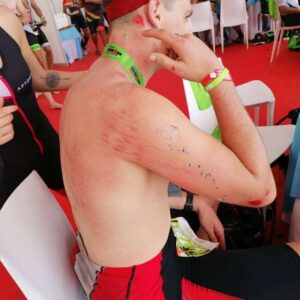 It has truly blown me away from the number of people silently suffering from concussion and/or TBI. So many people have come out of the woodwork with unbelievable stories either referring to their own experience or one of their loved ones. Sadly so many people that I know yet I had no idea they were suffering or had suffered. It is truly the silent killer being so debilitating yet nobody sees or understands the true extent of the implications. We all present similar stories, told that there is not much you can do you just need to give it time. I don’t believe this is the case! Following this eye-opening experience into this dark world with few answers it has driven me to help those in need and offer support as best I can.
Purpose of this Article
With the prevalence of TBI, sadly there is still very little in regards to assessment and treatment protocols. My goal with this article is to provide a resource for those also struggling, I want to keep this as simple and actionable as possible distilling the protocols and strategies I have applied. When suffering the last thing you want to be doing is reading literature or doing any kind of thinking at all so I hope this can help in guiding suffers towards finding the right tools and treatments for them. Again with the target of keeping things simple, I have linked the exact products I have used. The great thing about many of the strategies used they will not only benefit TBI sufferers but anyone looking to enhance their brain’s potential.My Goal:
Screw back to baseline, this incident is going to become my launching pad to optimal brain health and performance, surpassing pre-injury status.Shotgun Approach:
 In true scientific fashion, you should stick to one treatment and track progress before adding another to see its effectiveness but at the end of the day who cares as long as things are improving and moving the dial in the right direction. Plus as an A-Type personality, I don’t want to sit around and wait too long. As I write this I am over 3 months post-TBI and haven’t been able to train since and as an Ironman athlete who trains a couple of times a day this has been extremely tough. Along with this, I have had to pull the pin on my final two peak races for the year Ironman Malaysia & Taupo 70.3 which have now both been and gone.
Sadly with a head injury, there is no telling how long recovery will take (weeks, months, years or ever…) but I am doing everything I can to create the optimal environment so that my brain can heal and repair itself. It may not be in time to race this season and I will face that as it comes but in the meantime I am going to give my brain/ body every opportunity to bounce back in time. Although I am hitting this from all angles taking an intensive approach this doesn’t mean I am overdoing it. My key focus is still rest and recovery, keeping my overachieving mindset in check so the majority of strategies are around attaining deeper states of rest and recovery.
In true scientific fashion, you should stick to one treatment and track progress before adding another to see its effectiveness but at the end of the day who cares as long as things are improving and moving the dial in the right direction. Plus as an A-Type personality, I don’t want to sit around and wait too long. As I write this I am over 3 months post-TBI and haven’t been able to train since and as an Ironman athlete who trains a couple of times a day this has been extremely tough. Along with this, I have had to pull the pin on my final two peak races for the year Ironman Malaysia & Taupo 70.3 which have now both been and gone.
Sadly with a head injury, there is no telling how long recovery will take (weeks, months, years or ever…) but I am doing everything I can to create the optimal environment so that my brain can heal and repair itself. It may not be in time to race this season and I will face that as it comes but in the meantime I am going to give my brain/ body every opportunity to bounce back in time. Although I am hitting this from all angles taking an intensive approach this doesn’t mean I am overdoing it. My key focus is still rest and recovery, keeping my overachieving mindset in check so the majority of strategies are around attaining deeper states of rest and recovery.
Tools & Strategies: Where to start
In my last post, I shared my incident and my initial treatment while still overseas with limited resources, I discussed what is vital in the initial stages post-TBI so if you haven’t read this I highly recommend checking this out. In this post, I want to shed light on what I have been implementing since returning to NZ. I will introduce a wide range of tools and strategies, many of which are alternative treatments that are not often suggested or provided to TBI sufferers. I hope that this highlights there is a lot more you can do than the common recommendation of “waiting it out” while feeling helpless.Reframe
 With something as debilitating as a TBI it is easy to play the victim card but in doing so you are only crippling your recovery. Your recovery starts here! Shift your perspective from tragedy to opportunity, we are a makeup of how we perceive the world. There is no such thing as a positive or a negative situation, that can only be created from our perception of a given situation.
For example, it would be easy for me to take the crash negatively as I dedicated so much time, money, and effort towards this one race, plus the aftermath to follow of still 3 months of no training and missing my A race Ironman Malaysia and a few other smaller races. However, instead, I flipped it as a big believer that everything happens for a reason, this is where I realised first of all this was to teach me to slow down (Previously: Running Taylored Health & Performance, 3x Startup businesses, Studying Masters and Full-time Ironman training) and that I had the perfect foundation with academic background and now a TBI suffer to first help myself but in doing so learn what works and then use my story to help other people suffering from this silent killer.
With something as debilitating as a TBI it is easy to play the victim card but in doing so you are only crippling your recovery. Your recovery starts here! Shift your perspective from tragedy to opportunity, we are a makeup of how we perceive the world. There is no such thing as a positive or a negative situation, that can only be created from our perception of a given situation.
For example, it would be easy for me to take the crash negatively as I dedicated so much time, money, and effort towards this one race, plus the aftermath to follow of still 3 months of no training and missing my A race Ironman Malaysia and a few other smaller races. However, instead, I flipped it as a big believer that everything happens for a reason, this is where I realised first of all this was to teach me to slow down (Previously: Running Taylored Health & Performance, 3x Startup businesses, Studying Masters and Full-time Ironman training) and that I had the perfect foundation with academic background and now a TBI suffer to first help myself but in doing so learn what works and then use my story to help other people suffering from this silent killer.  Attaining this mindset is easier said than done and like any skill takes time to cultivate but is quite possibly the most important skill in the recovery of any injury! I am thankful to have a life coach as a mum so this was ingrained into me early on so lucky this is a great skill of mine. If this is a new skill it will take the time you want to ensure you have a support team to remind and keep you honest in cultivating this mindset. But if done right, I see time and time again in my practice those who frame things in a positive light always bounce back substantially quicker.
Floatation Therapy
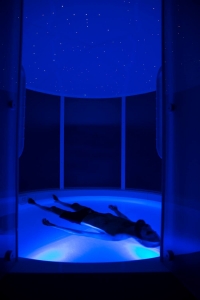 I have been asked many times what is the one treatment that I believe is having the most impact. I have found that nothing comes close to floatation therapy especially initially but also ongoing as it puts you into a state of sensory deprivation which provides the perfect environment for your brain to rest and recover due to the removal of stimuli (sound, feel, sight). Plus with the high concentration of magnesium in the water (something I discussed in my previous post about initial TBI Treatment) magnesium is not only important for inflammation but will also help you with sleep which is often a struggle with TBI suffers.
Application:
I have been asked many times what is the one treatment that I believe is having the most impact. I have found that nothing comes close to floatation therapy especially initially but also ongoing as it puts you into a state of sensory deprivation which provides the perfect environment for your brain to rest and recover due to the removal of stimuli (sound, feel, sight). Plus with the high concentration of magnesium in the water (something I discussed in my previous post about initial TBI Treatment) magnesium is not only important for inflammation but will also help you with sleep which is often a struggle with TBI suffers.
Application:
- During the early stages, I was floating at Serenity Float Clinic 3x/week and now 1-2x/week
Palming/ Mindfulness
 For those that can’t access or afford regular floats, don’t worry you can do your best to replicate at home with a blacked-out room and place your palms over your eyes, this will remove all eye stimulation and provide them a chance to rest.
Coupling this with some mindful meditation (discussed in the previous post) will enhance the benefits as you will also impact your parasympathetic nervous system (downregulation system) which will calm your system down and as a result aid in reducing inflammation and heart rate which can be the trigger to worsening symptoms.
For those that can’t access or afford regular floats, don’t worry you can do your best to replicate at home with a blacked-out room and place your palms over your eyes, this will remove all eye stimulation and provide them a chance to rest.
Coupling this with some mindful meditation (discussed in the previous post) will enhance the benefits as you will also impact your parasympathetic nervous system (downregulation system) which will calm your system down and as a result aid in reducing inflammation and heart rate which can be the trigger to worsening symptoms.
Breathwork
Another practice I have been really doubling down on recently is my breathwork practice. I have been doing breathwork for a while now but again with the extra time and the healing power of our breath I put a greater focus on this. Lung injury often occurs shortly after brain damage, therefore, anything that helps in regaining or enhancing lung function will be beneficial. Besides this though breathwork is powerful in its ability to tap into the autonomic nervous system (responsible for the control of bodily functions not consciously directed). The breath is the only autonomic nervous system that functions under your control. It allows you to either stimulate (Sympathetic nervous system) or down-regulate (Parasympathetic Nervous System). Obviously in the case of recovery and trying to regain control of an overstimulated system we are after the latter. Application:- A regular morning and evening practice and I also utilised it whenever overstimulated most of the time alongside mediation
Sleep
Although floating has been most effective nothing is more important than sleep when it comes to brain recovery. It doesn’t matter what else you are doing if you are not getting good quality sleep you are crippling your recovery. This is a bit of a double-edged sword as TBI often impacts the ability to sleep especially when achieving Rapid Eye Movement (REM) sleep which is a critical restorative stage of sleep vital to promote recovery. With any injury, sleep should become the primary focus but this is even more important for any brain injury because it was recently discovered that as we sleep our brain has a clearing and repairing system (Glymphatic System). Following a TBI your brain will see an influx in beta-amyloid and tau protein these are what will cause the long-term impact if not removed because these two are also the key mechanisms associated with Alzheimer’s and Dementia. This is why following a TBI your chance of also suffering Alzheimer’s and Dementia skyrockets. This is one reason why TBI recovery is so vital. Therefore, the number one goal in TBI rehab should be to allow the body to do what it does best and flush out these via the glymphatic system while sleeping because if not sleeping the system is unable to work at the same capacity A recent study shows that deep non-REM sleep is where both the brain and cardiopulmonary activity slow down, is the perfect sleep stage for the glymphatic system to function properly. This may be the reason why REM is often harder to achieve post-TBI as your body is naturally requesting more deep sleep to clear and repair the brain, this is just my insertion this is a very new area of science that will need to be validated. Application:
Now that I have presented the argument around why sleep is important post-TBI, how do you take charge of your sleep?
Application:
Now that I have presented the argument around why sleep is important post-TBI, how do you take charge of your sleep?
- Prioritise: Nothing is more important
- Sleep Consistency: Lock in a consistent time aim for a minimum of 8hrs (your brain needs more sleep than normal to repair itself)
- Prime your sleep: Morning and Evening Routine that primes your circadian rhythm
- Sleep Sanctuary: Develop a relaxing sleep environment
- Track: I use: Oura Ring
- Remove Stimulants:
-
- Technology: No 1hr before bed and limit as much as possible elsewhere
- Bluelight: After Sunset
- Caffeine & Alcohol: Limit as much as possible, especially close to bedtime
Cold Immersion
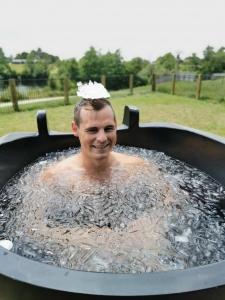
Ice bath at a breath workshop
- Increase in Mitochondria health (Free energy ;))
- Increase in weight loss/ management
- Reduction in inflammation
- Improved lymphatic system
- Improved immune system
- Improved circulation
- Mental toughness
- Temperature regulation
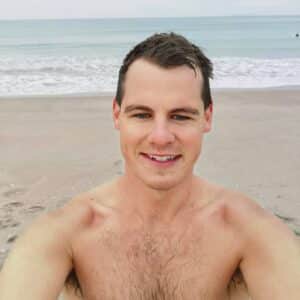
Daily cold plunge while over in the mount
- Daily cold showers: Full body and especially injury site and Ice Baths or winter lake and ocean swims (where possible)
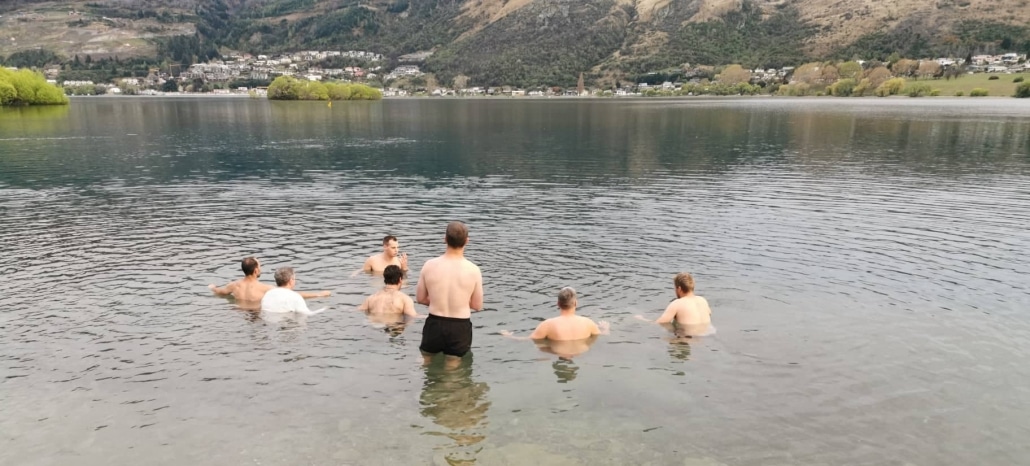
Work Retreat in Queenstown taking others through the process
Screen Time
Initially and throughout recovery, one of the worst things you can do is stare at a screen which is challenging in this day and age because when you not doing anything that is the first thing you do is pick up a screen and watch something or aimlessly scroll through social media. This was particularly hard for me while still overseas as I was travelling by myself I had to use screens to get around not to mention the unneeded stress of getting around. Regardless, early on you want to provide your brain with the best opportunity to rest so you want to stay clear from screens a much as possible. However, like anything sometimes you can’t avoid them if this is the case the next section is for you. Application:- Avoid as much as possible. Turn down brightness and put on night mode or install a blue-blocking app to reduce stimulation (F.Lux or Iris)
Glasses
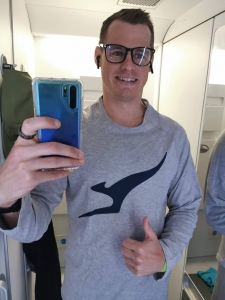
Rocking my blue blockers in my Qantas business class PJ’s on my home from Singapore
Near-infrared light
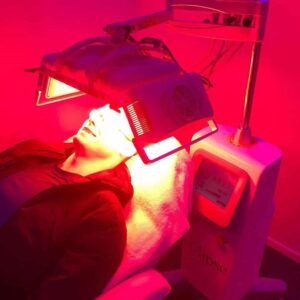 Although some light is damaging others are healing! I also stopped into Recharge Cryo for clinical-grade light therapy or photobiomodulation therapy (PBM). this is a passive non-invasive treatment which lasts approximately 15min where you lie under a lamp which emits deep penetrating and soothing light which is targeted deep into the skin cells to help heighten their internal functions, increase blood flow and help induce faster healing through the stimulation of ATP (the energy to your cells),
Application:
Although some light is damaging others are healing! I also stopped into Recharge Cryo for clinical-grade light therapy or photobiomodulation therapy (PBM). this is a passive non-invasive treatment which lasts approximately 15min where you lie under a lamp which emits deep penetrating and soothing light which is targeted deep into the skin cells to help heighten their internal functions, increase blood flow and help induce faster healing through the stimulation of ATP (the energy to your cells),
Application:
- 15min sessions more always better, I have struggled to find the time to get across town but would like to do 2x/week
Nutrition
Once home, I remained on a similar protocol to while I was in Singapore but now home I could access everything I needed to enhance the recovery. Lucky I had the majority of everything I was after already waiting in my cupboard back at home. Initially, I tried to remain as ketogenic as possible with my diet due to the positive impact of being in ketosis as it is the ideal environment for brain repair and performance (same reason I was taking ketone supplements). Although normally easy for me to do, this time it wasn’t! I found my brain was craving carbohydrates and calories and those that follow me know I am all about listening to the body. Instead of stressing my system and restricting carbohydrates I instead did my best to achieve ketosis through diet and time-restricted eating (14-18hrs) without stressing the system any more but when the body was craving calories and/ or carbs I would give it what it was asking for. The last thing you want to do when recovering is to starve yourself and be in a calorie deficit as your body won’t be able to recover optimally. However, it is a fine line between boredom eating and cravings which has been a struggle for me as I never had so much spare time….Ketone Supplements:
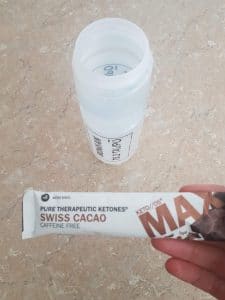
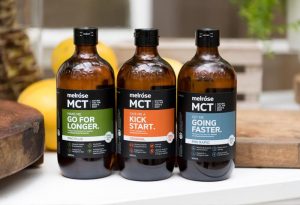 Once home, I consulted a friend who is an expert in this space Cliff Harvey and he suggested keeping beta-hydroxybutyrate levels (ketones) high throughout the day to provide the required fuel to the brain. But instead of eating keto, he suggested taking supplements to upregulate and aid my damaged brain.
Application:
Once home, for the initial 3 weeks:
Once home, I consulted a friend who is an expert in this space Cliff Harvey and he suggested keeping beta-hydroxybutyrate levels (ketones) high throughout the day to provide the required fuel to the brain. But instead of eating keto, he suggested taking supplements to upregulate and aid my damaged brain.
Application:
Once home, for the initial 3 weeks:
- MCT oil 3xday (breakfast, lunch, dinner) to aid with slow production of ketones
- 1-2x Exogenous ketone supplement (Pruvit) broken out across the day, to achieve deeper states of ketosis to prolong impact.
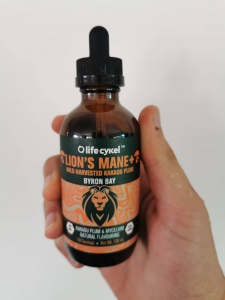
Lions Mane (Mushroom):
You may not have heard about this one but it is something I have a deep knowledge of as I am currently doing my Masters around this amazing mushroom! Due to the high concentration of the Beta-Glucans in this fungus, Lion’s mane is known for its neuroprotective and growth potential while reducing reactive oxygen species (ROS) and bringing down the inflammation. Naturally the best thing for me right now! Also another recommendation from Cliff Application:- I added this alongside MCT Oil 3x day (LifeCykle double extract)
Coenzyme Q10
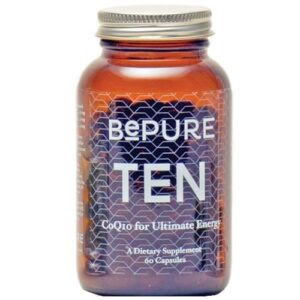 A naturally occurring antioxidant in the human body and if you recall I discussed the power of antioxidants in my last post. Following TBI Coenzyme Q10 has presented a positive effect on animals and their brain recovery, as it reduces neurodegeneration
(the death of brain cells) and increases blood supply to the brain. Another supplement that won’t cause any more harm and with potential benefit I absolutely think it is worth taking
Application:
A naturally occurring antioxidant in the human body and if you recall I discussed the power of antioxidants in my last post. Following TBI Coenzyme Q10 has presented a positive effect on animals and their brain recovery, as it reduces neurodegeneration
(the death of brain cells) and increases blood supply to the brain. Another supplement that won’t cause any more harm and with potential benefit I absolutely think it is worth taking
Application:
- 2x BePure10 twice/ day (Morning and afternoon)
Exercise:
 Throughout this process, I continued to keep active as best I could, which was very light and probably better described as a movement not exercise. Lots of walking and stationary bike, however, focusing on staying symptom-free. The rule of thumb for post-concussion syndrome rehab is to work at 80% of the symptom threshold. This is best achieved by working out with a heart rate strap and working out until you reach symptoms. Once achieved symptoms calculate 80% of heart rate and aim to keep future workouts under this threshold eg. symptoms spike at Heart Rate of 100 beats/min, 80 beats/min is your new threshold. However, this can be challenging and requires regular testing as you recover because the goalposts will keep moving.
I have also used this as an opportunity to focus on areas that often get neglected and focused on more restorative movement practices such as Yin Yoga, and imbalance correction work. Too often when in the mix of intense training it can be hard to find the time and initially I had nothing but time…. However, due to mental fatigue, I can’t say it always happened but did my best. I have also been putting a greater focus on getting out into nature for my movement due to the therapeutic standpoint as nature promotes so many positive health benefits.
Application:
Throughout this process, I continued to keep active as best I could, which was very light and probably better described as a movement not exercise. Lots of walking and stationary bike, however, focusing on staying symptom-free. The rule of thumb for post-concussion syndrome rehab is to work at 80% of the symptom threshold. This is best achieved by working out with a heart rate strap and working out until you reach symptoms. Once achieved symptoms calculate 80% of heart rate and aim to keep future workouts under this threshold eg. symptoms spike at Heart Rate of 100 beats/min, 80 beats/min is your new threshold. However, this can be challenging and requires regular testing as you recover because the goalposts will keep moving.
I have also used this as an opportunity to focus on areas that often get neglected and focused on more restorative movement practices such as Yin Yoga, and imbalance correction work. Too often when in the mix of intense training it can be hard to find the time and initially I had nothing but time…. However, due to mental fatigue, I can’t say it always happened but did my best. I have also been putting a greater focus on getting out into nature for my movement due to the therapeutic standpoint as nature promotes so many positive health benefits.
Application:
- Don’t exceed 80% HR of symptom threshold. Use additional time to focus on the restorative types of training we often neglect eg imbalance correction and yoga etc
Professional help
I know all advice up until now is a result of being frustrated by the current limitations of the system but by no means have I gone this alone. Regardless I highly recommend everyone wraps themselves around with practitioners to aid you on your journey. Also, in no way is this an attack on practitioners’ knowledge or services many of them were amazing! However, the practitioners are fighting an uphill battle especially in concussion treatment as it is a quickly growing body of research (American football is the key driver behind this), and due to the system they work within it often takes time to filter through to practice as it needs to be accepted as the scientific consensus prior to them being able to utilise as a practitioner, this sadly takes time. If they suggest something away from the consensus it is their head on the chopping board so it is in their best interest to stick to the tried and true. I believe it is the model, not the practitioner’s fault, they have the patient’s best interests at heart, just fighting a limited model. Below I have outlined the reasons behind each practitioner I saw to help guide my recovery:-
Doctors:
-
Osteopath:
-
Chiropractor:
-
Sports Doctor
-
Occupational Therapist (Concussion Clinic):
-
Physiotherapist (Concussion Clinic):
- Benign – it is not life-threatening
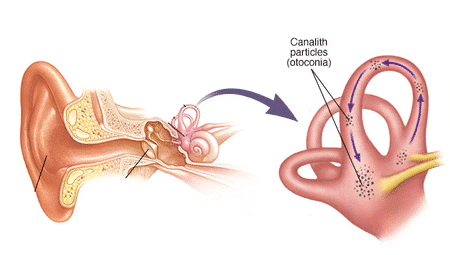
- Paroxysmal – it comes in sudden, brief spells
- Positional – it gets triggered by certain head positions or movements
- Vertigo – a false sense of rotational movement
-
Neurologist (Concussion Clinic):
Thinking outside the box:
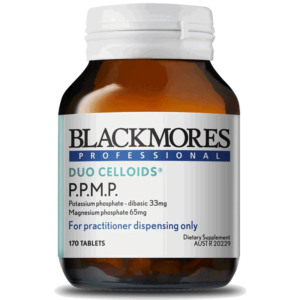 The next few are not a classical treatment but again I am interested in hitting it from all angles.
-
Clinical Pharmacist & Mineral Therapist:
-
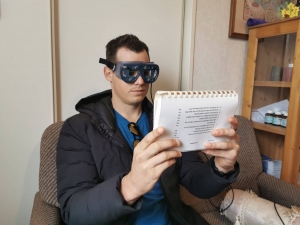
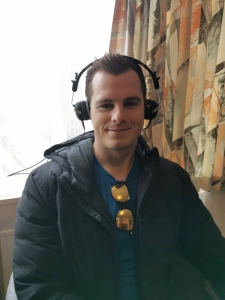
Auditory/ Visual Therapy: